
Returning to Nature
Being a paleontologist and natural historian, I truly enjoy exploring the natural wonders of our incredible and rare planet. What I like even more, in fact, what I am passionate about is sharing this joy with others—introducing them to the natural and geological beauty that is all around them. Sharing these wonders with my wife and daughter has provided lasting memories and the opportunity to spend quality time together away from the chaos that can be our day-to-day lives.
Hiking in the Snow and Caving Fun
Just before teaching my first geology class for a local community college twelve years ago, I did a reconnaissance trip to explore the local geology as I had never done before in preparation for taking my students on field trips. I invited my daughter, who was five at the time, to join me. It was January. It was a crisp, snowy kind of day, and we had a fantastic time exploring. Visualizing her running through the swirling snow squalls as we raced back to the car is as clear in my mind today as it was then. It concluded with a stop at Burger King to warm up with a cup of hot cocoa and some fries (always a good combination). To this day, it is still one of my favorite memories.
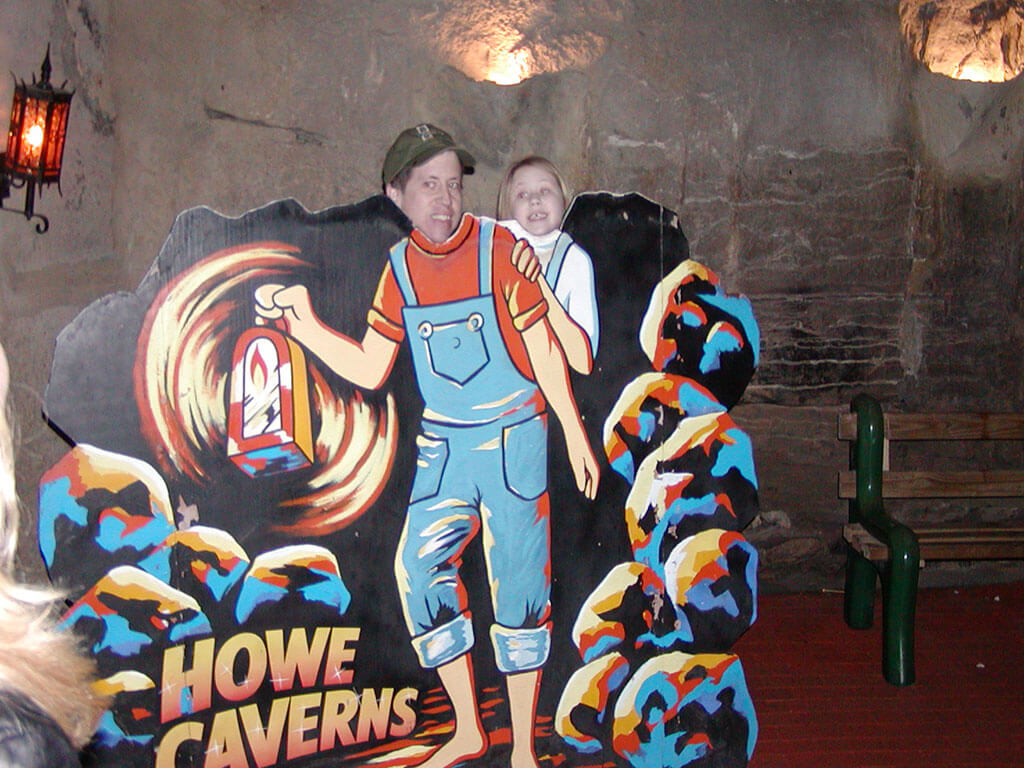
Just a couple of years later, I took my historical geology class for a trip to a system of caves and caverns called Howe’s Caverns, which was about a two-and-a-half-hour drive from home. My daughter accompanied us. We were guided through a series of winding passages, which included a boat ride on an underground river. Everyone really enjoyed learning about karst topography and how caves form but also just spending time together. The only downside was that my daughter forgot her little daypack, including her camera, at the caverns. Luckily, though, it was returned by mail a short time later—another top memory!
A Trip to the Mountains
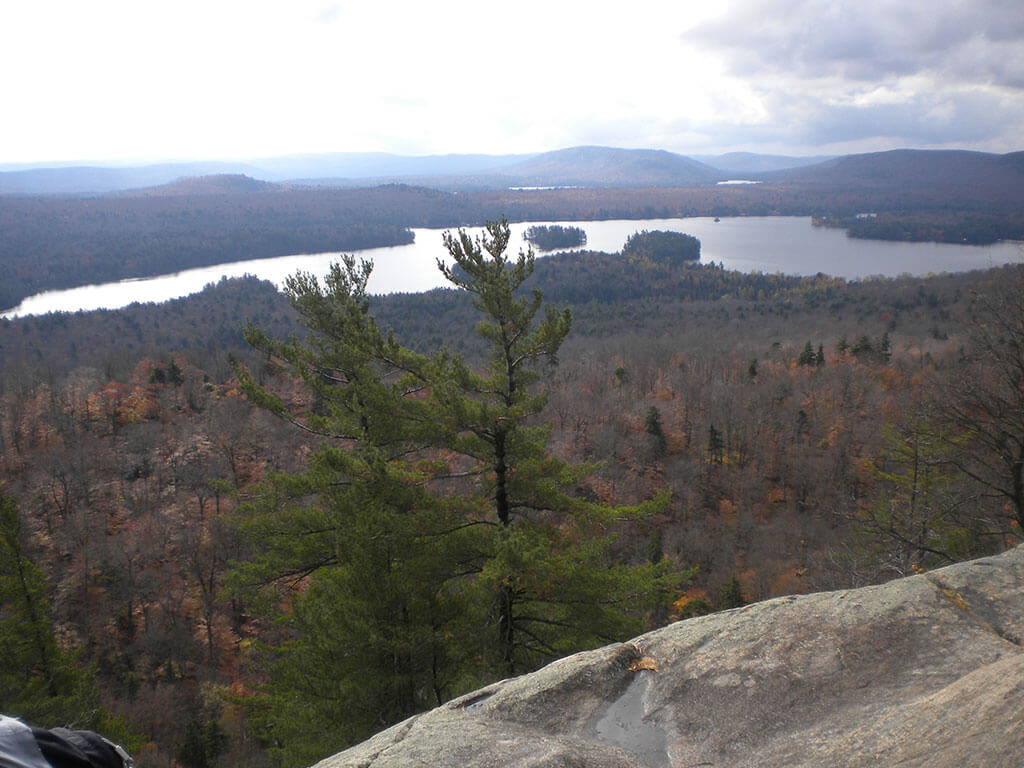
It has been great sharing these experiences with my family, and I believe they have created a unique bond between us, but they are not shared with just family members. One of my passions is the Adirondack Mountains of New York State. I love the geology, the natural wonders of the six-million-acre state park, and also the cultural history. What I particularly like to do is introduce folks to these mountains who have never experienced them before. Often, they are students, but not always. For example, this past May, I took two young men who were from Barbados on a day trip to explore some of the lower peaks of the mountains. They were in awe and left wanting more; it is one of my favorite ways to spend a day.
Last fall, I took a small group of students on a trip to the Adirondacks. Many had never been there before. We climbed peaks with fire towers, hiked around lakes, and had a terrific day. The excitement and surprise at the beauty of the mountains and of their accomplishments really impressed some of them. It was clear that I had provided a really special experience. I loved it. I was definitely in my happy place.
Do You Have To Be a Scientist?
The really cool thing is that you do not have to be an academically trained geologist or a natural historian to have these experiences with your family or with others who have similar interests. In fact, I think it can even improve the experience if you are not; this way, you are all learning together. When you have knowledge that others do not, you may find yourself lecturing more than what your companions may like (yes, personal experience here).
What Do You Need Before You Can Begin Exploring Together?
First, you need the desire—the interest to do it. It’s really quite simple. Get out there and explore. Some prior planning and organization will help improve the experience, but do not overthink it. Here are a few things to help you plan your trip:
First, you should decide what you want to do and what you want to explore. Are you interested in the geology (rocks, minerals, and fossils)? Do you want to merely see things in person, or do you actually want to collect them and bring them home with you? You will not be allowed to collect specimens in all areas, so be sure to check before collecting any. Do you want to observe the flora and fauna? Some locations are great for doing both, some for one or the other, so do a little research. The Internet is a great place for finding information on state, county, and national parks in your area. The blue pages of your phonebook is another good place to look, and you can also call your state’s geologist for suggestions about where to go; the state geology department should be found in the phonebook and/or online.
Exploring the natural world does not have to be expensive. A few things you will want to take include a good pair of binoculars; a good camera and a journal for jotting down thoughts, questions, and feelings that you might forget when you get home. A small digital recorder can also be used as an audio journal for you. You will want a daypack to carry your water, food, binoculars, camera, extra clothes, extra batteries for your camera (few things are more frustrating than discovering that your batteries are dead when out exploring), digital recorder if using one, and bug spray, depending on the time of the year. You will need a map of the area you are exploring (and the ability to read it), first aid kit, sunscreen, and lip protectant.
You will also want good guidebooks. I recommend Kids on the Trail: Hiking with Children in the Adirondacks by Rose Rivezzi and David Trithart. I have used this one, but similar guides that are also good are available for most states. The Peterson Field Guide Series is great for just about anything you want to identify (e.g., birds, mammals, insects, rocks and minerals, the stars, medicinal plants, animal tracks, amphibians and reptiles, butterflies, mushrooms, trees, shrubs, and flowers). For identifying fossils, I would also recommend Fossils (Golden Field Guide Series) by Frank H. T. Rhodes, Paul R. Shaffer, Herbert S. Zim, and Raymond Perlman.
You likely already have some of these things around your home. If not, you can certainly improvise and use items you already have and add to your explorer kit as you go. The things I have listed here are for the best experience, but beyond the issue of safety (water, map, first aid kit, phone), the rest are not absolutely required, so get out there and enjoy. You also need to use common sense. Start out slow, and work your way up to more adventuresome trips if that is desired. Many great adventures await you that are not wilderness outings and do not require much experience to enjoy them safely. If you are unsure, don’t do it, or find an experienced guide to go with you, and always let someone know where you are going and your itinerary.
The bottom line is that you need to get out there and explore with your family or others who are like-minded. You will produce memories and form bonds that will last a lifetime—and they may just bring you to your happy place. Enjoy!
Share This Story, Choose Your Platform!





News To Your Inbox
Sign up to our newsletters, top tips on family life & parenting.